



Glaze Chemistry Lab - Four-Day Glaze Workshop
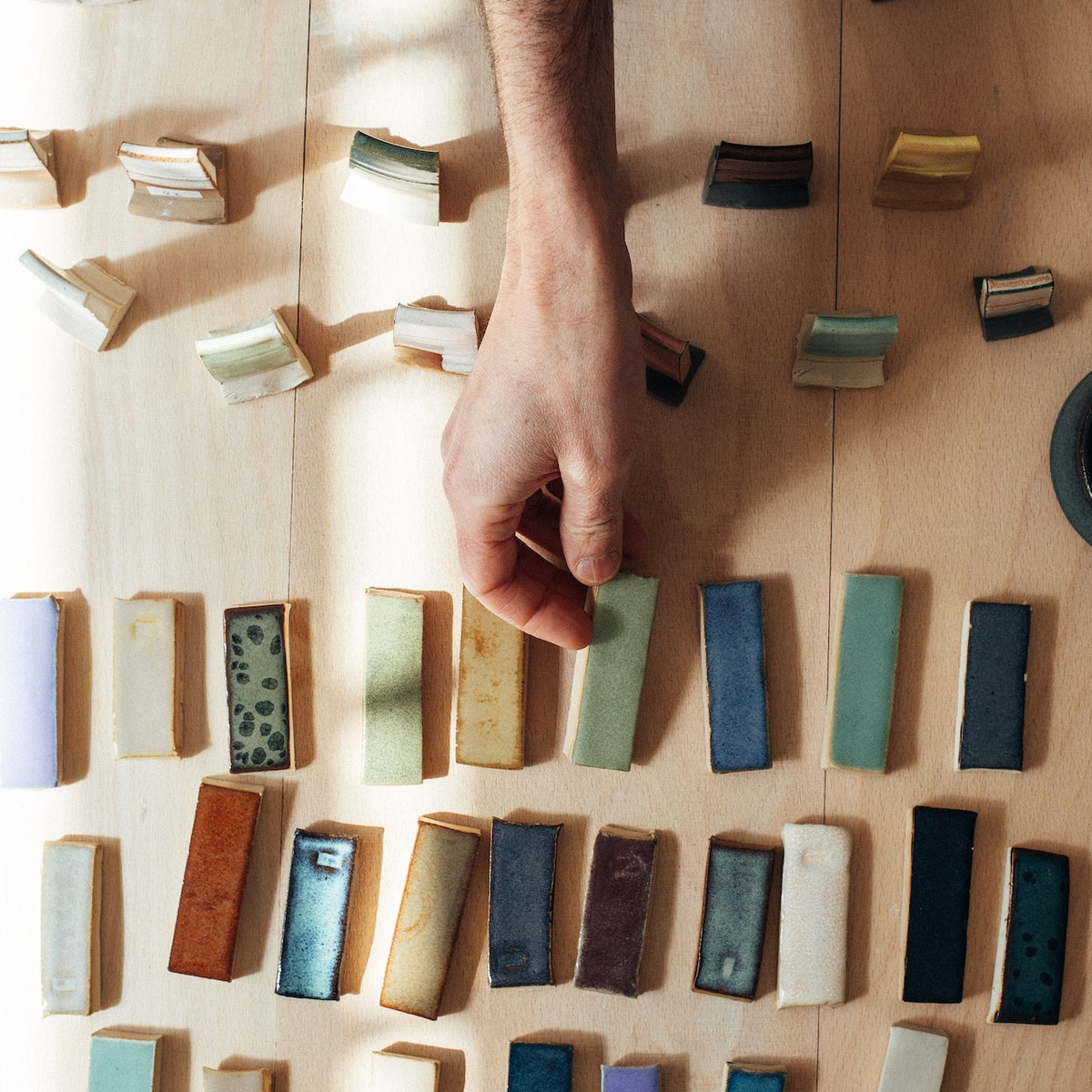
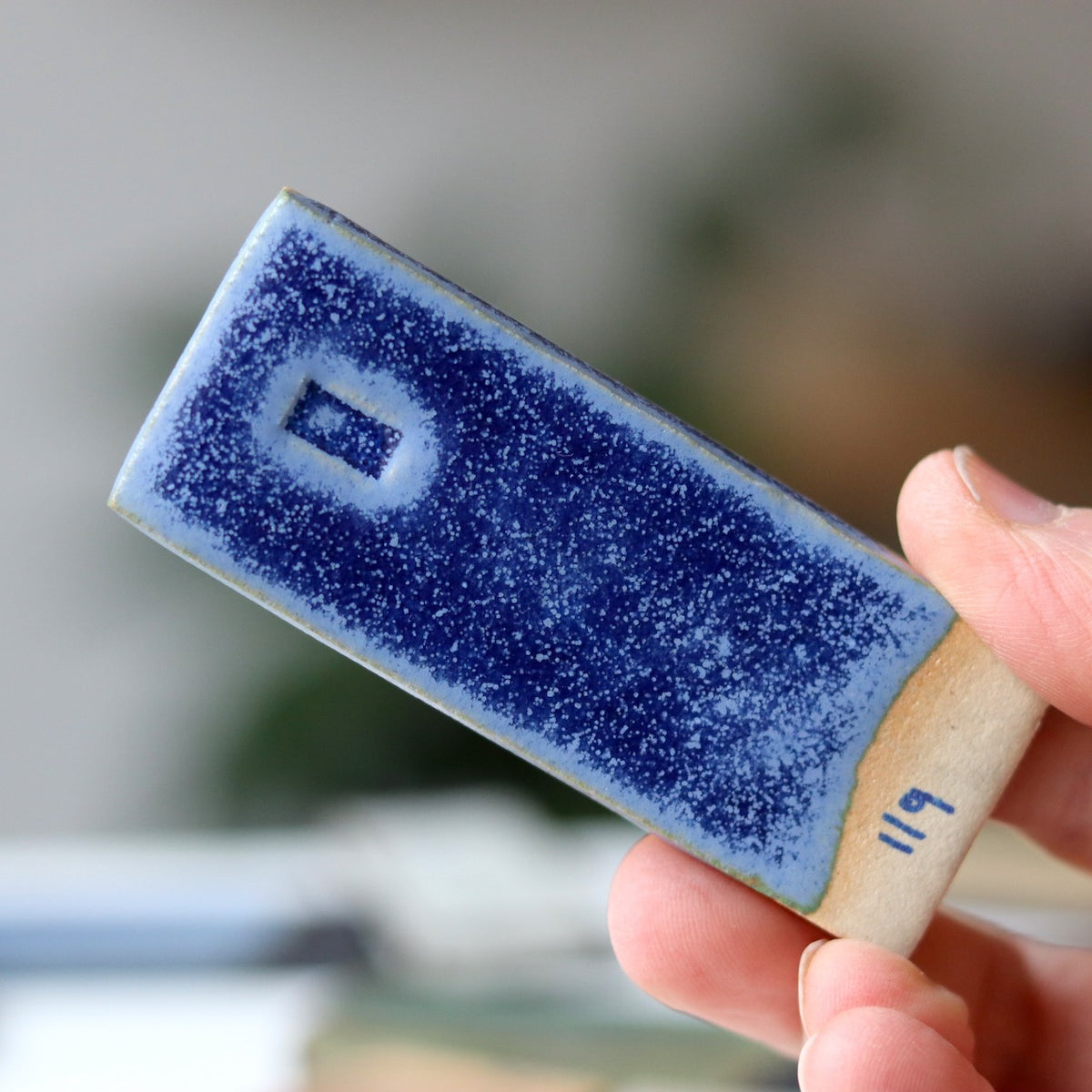
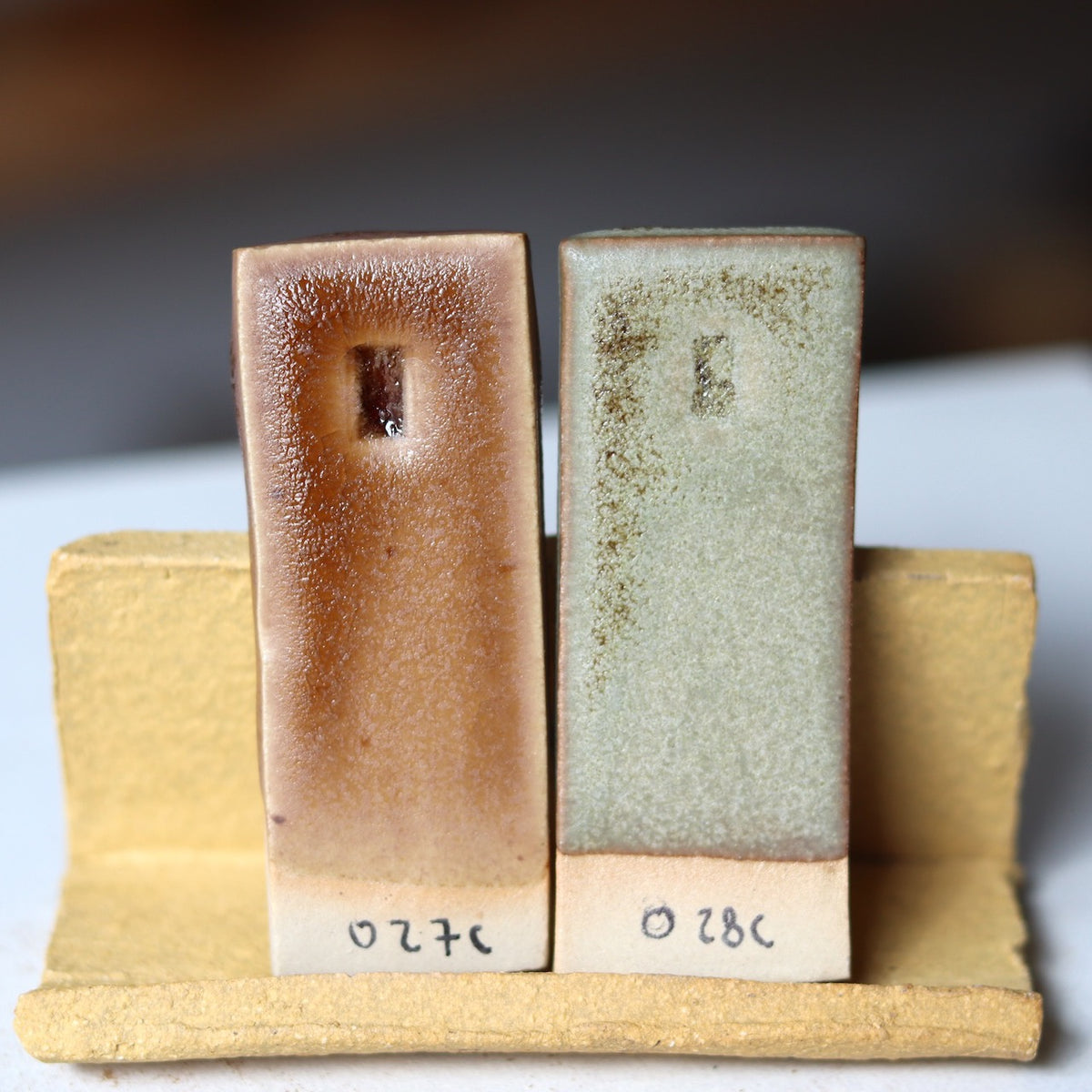
● Materials, test tiles and kiln firings included.
● Two levels: Beginner and Intermediate, booked separately.
● 4 days, Thursday to Sunday, 28–31 January 2027.
● Small groups with up to 8 participants per level
Thursday 28 - Sunday 31 January 2027
Description
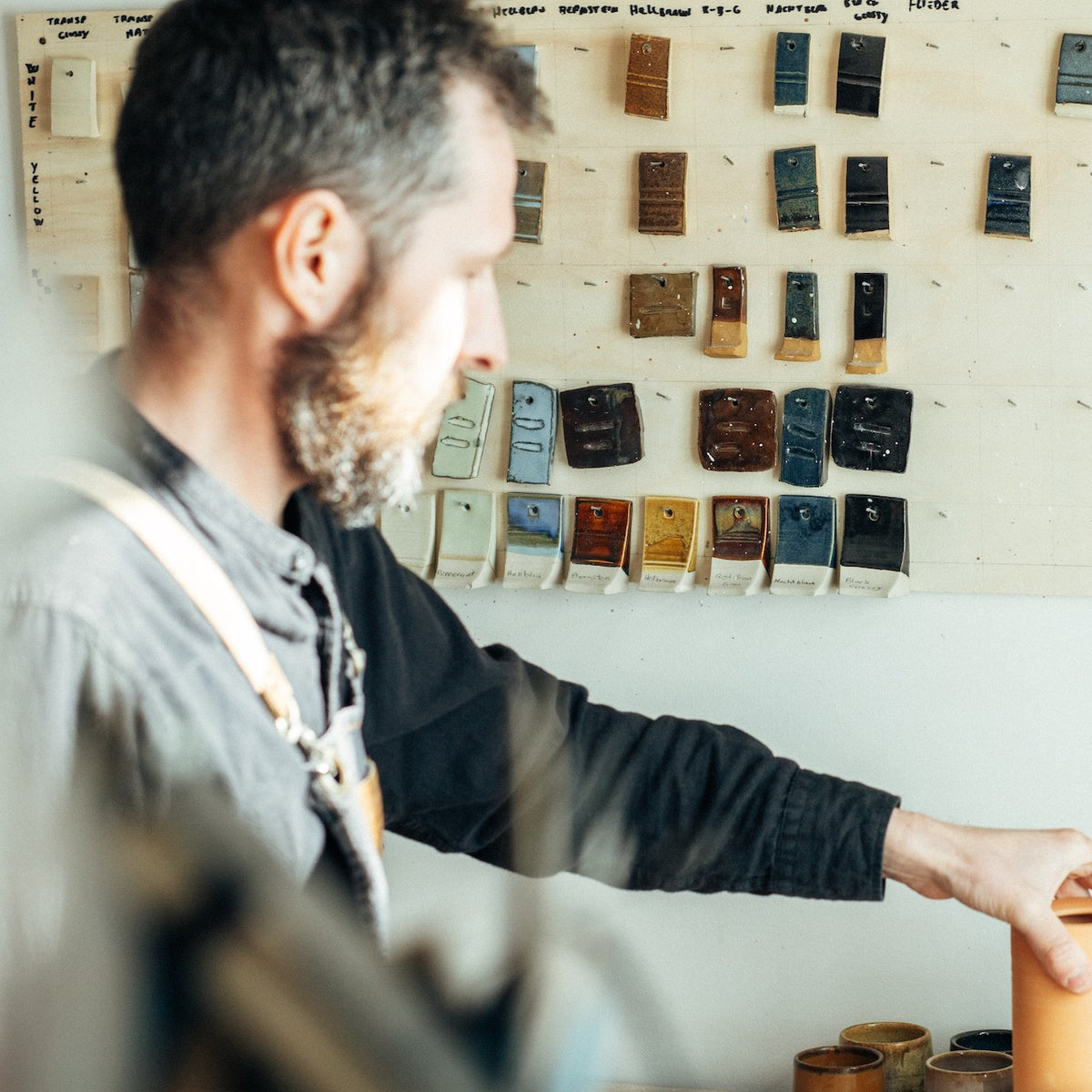
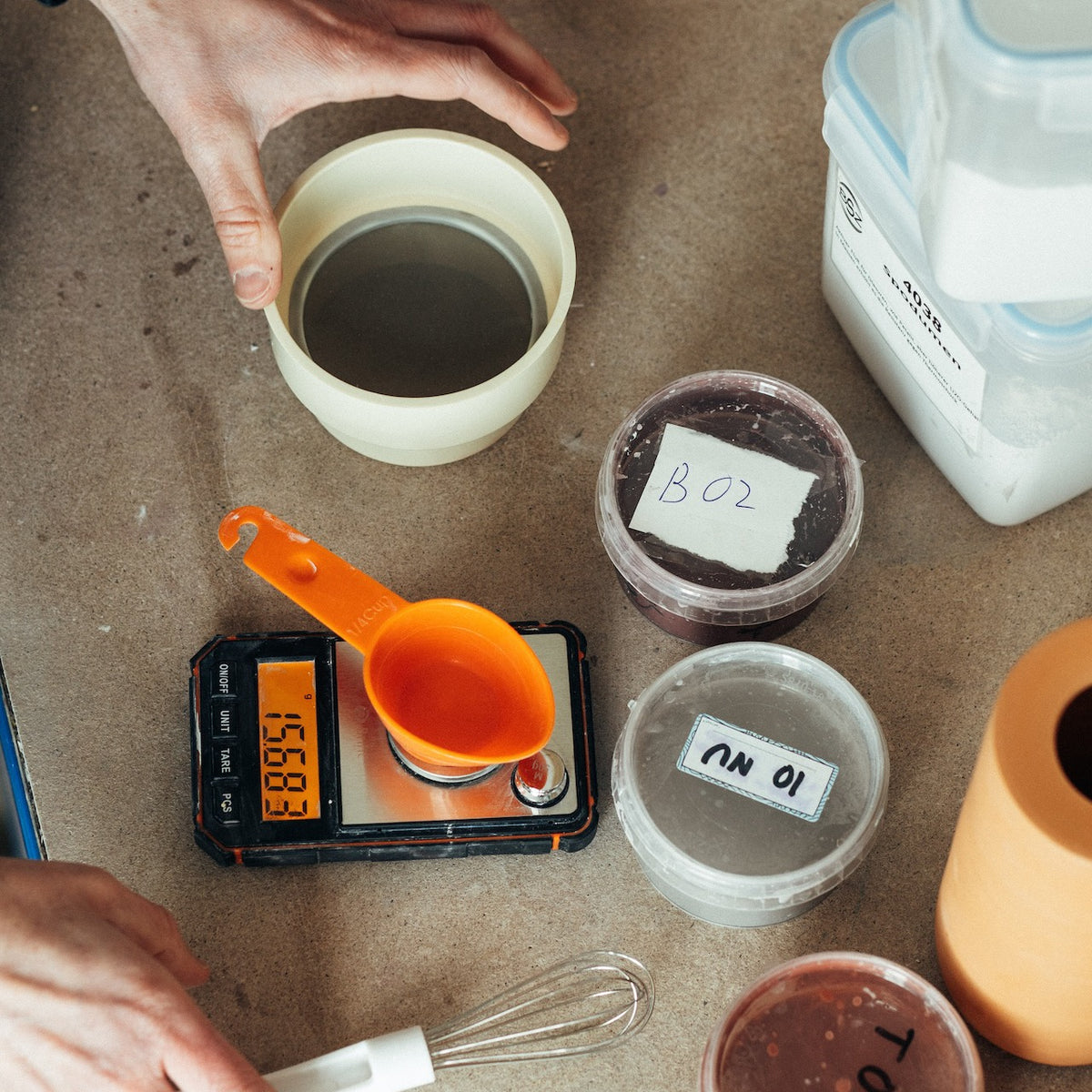
Good glazes don't happen by accident. This four-day workshop teaches you to work with glaze chemistry directly: reading formulas, running tests and developing surfaces that are repeatable, adaptable and genuinely your own. Taught in English by Riccardo of Blayse Ceramic Studio, Berlin.
Choose your level: Beginner or Intermediate. Each level is limited to eight participants and booked separately. The fee is per person and includes all materials, test tiles and kiln firings.
Dates
Thursday 28 to Sunday 31 January 2027
Beginner: Thu-Sat 16:30-19:30, Sun 15:30-18:30
Intermediate: Thu-Sun 10:30-14:30
Beginner: Understand, Test, Create
For anyone who works with clay and wants to move past commercial glazes or borrowed recipes, whether professional or hobby. No prior experience with glaze chemistry is needed, just curiosity. Each day combines a focused lecture with hands-on lab time.
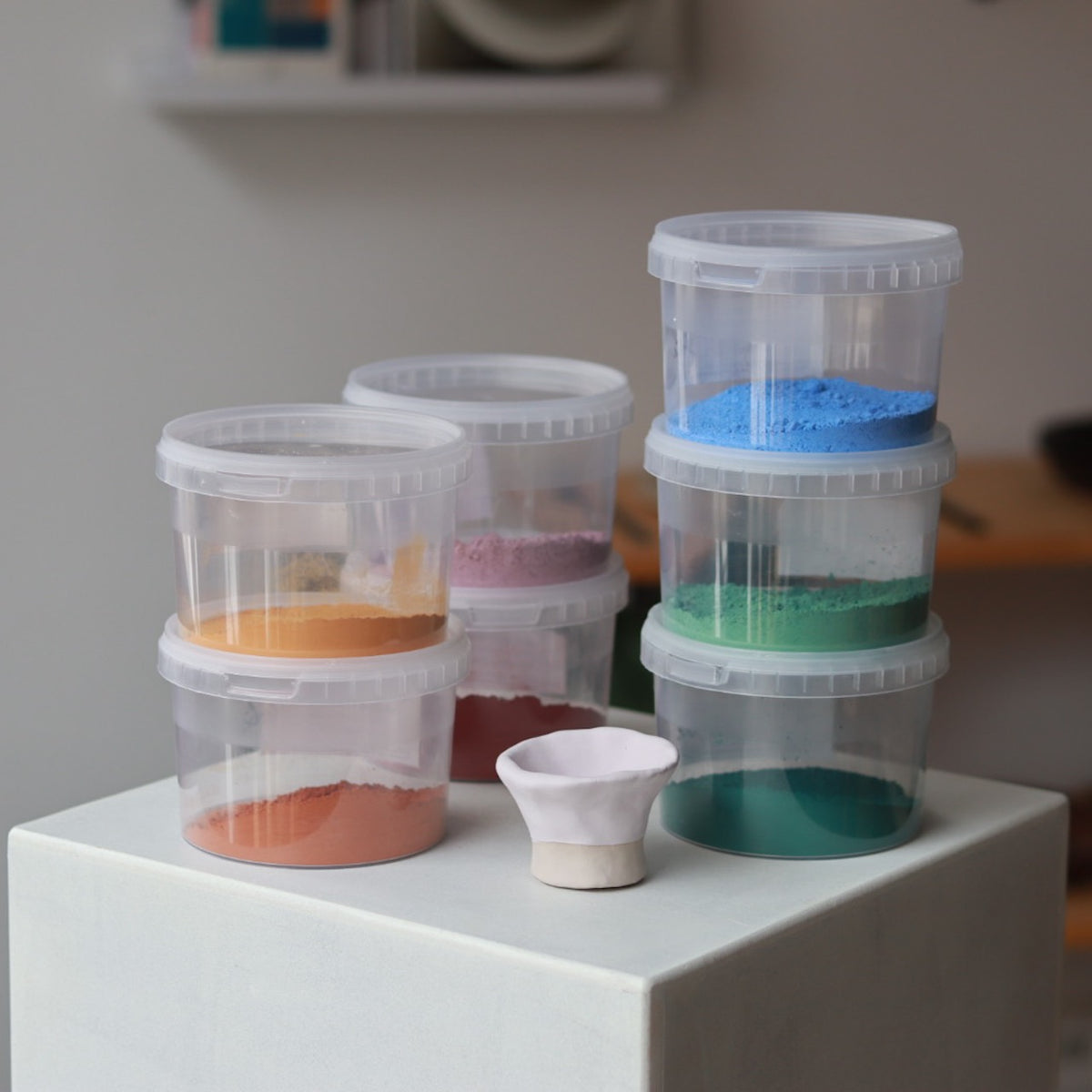
- A solid grasp of raw materials: what they are, where they come from and what they do in a glaze
- The ability to read, interpret and modify a glaze formula, including UMF and the Stull chart
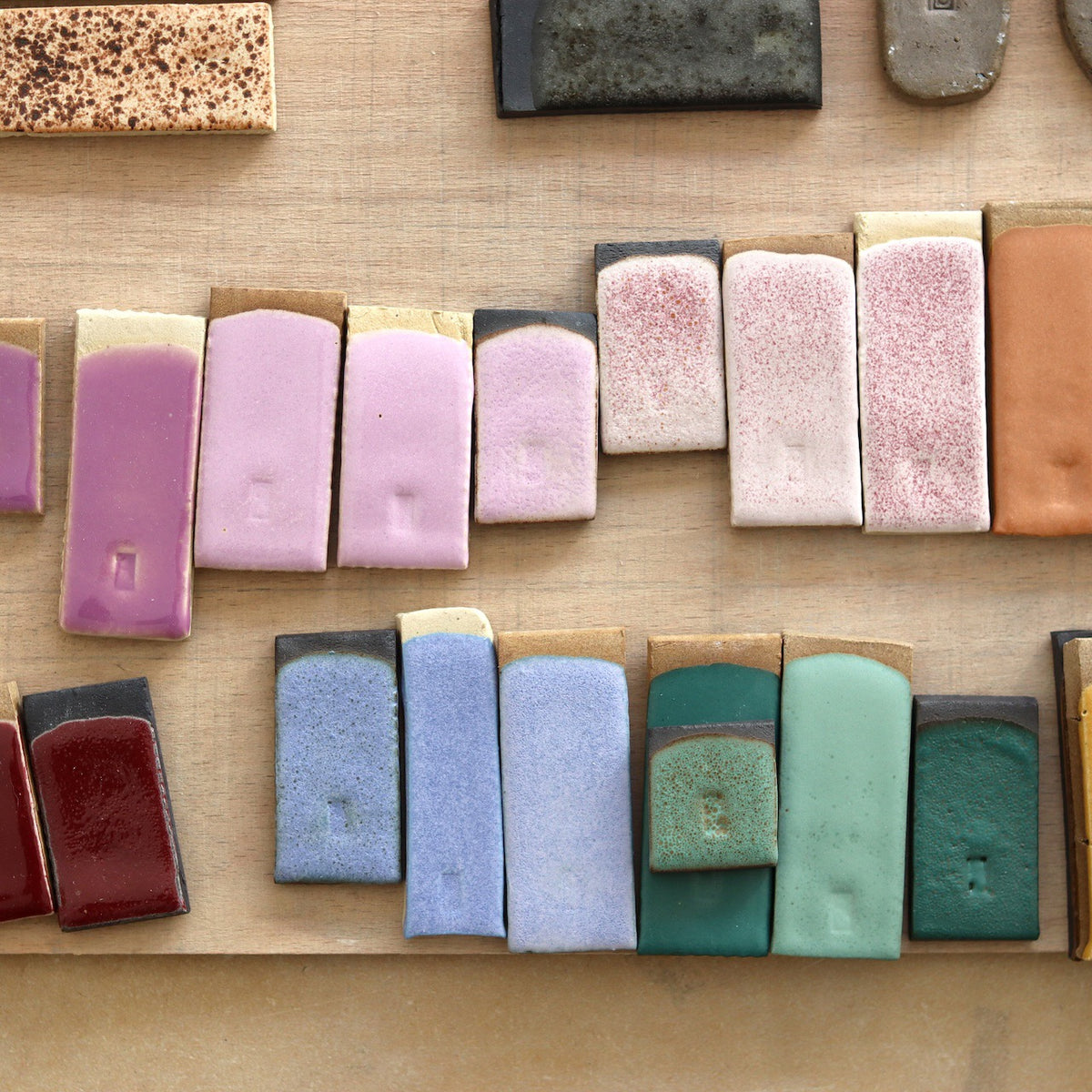
- Experience with structured tests: line blends, triaxial blends, colorant comparisons
- Colorants, opacifiers and glaze defects: how they behave, how to correct them and how to use special surface effects
- Confidence using Glazy, Digitalfire and published glaze texts
Intermediate: Glaze Design
Testing strategies for your own glazes: refresh, restart, refine. The follow-up for ceramists who already mix glazes and want to stop guessing and start testing with intent. Most of your time goes to designing, running and reading experiments. Bring your own project or choose from a pool of testing strategies. For participants of the Beginner course or with equivalent experience.
- Design systematic tests for the question you're asking
- Create and adapt base glazes from raw materials or from a UMF
- Use eutectics and De Montmollin diagrams to guide flux choices
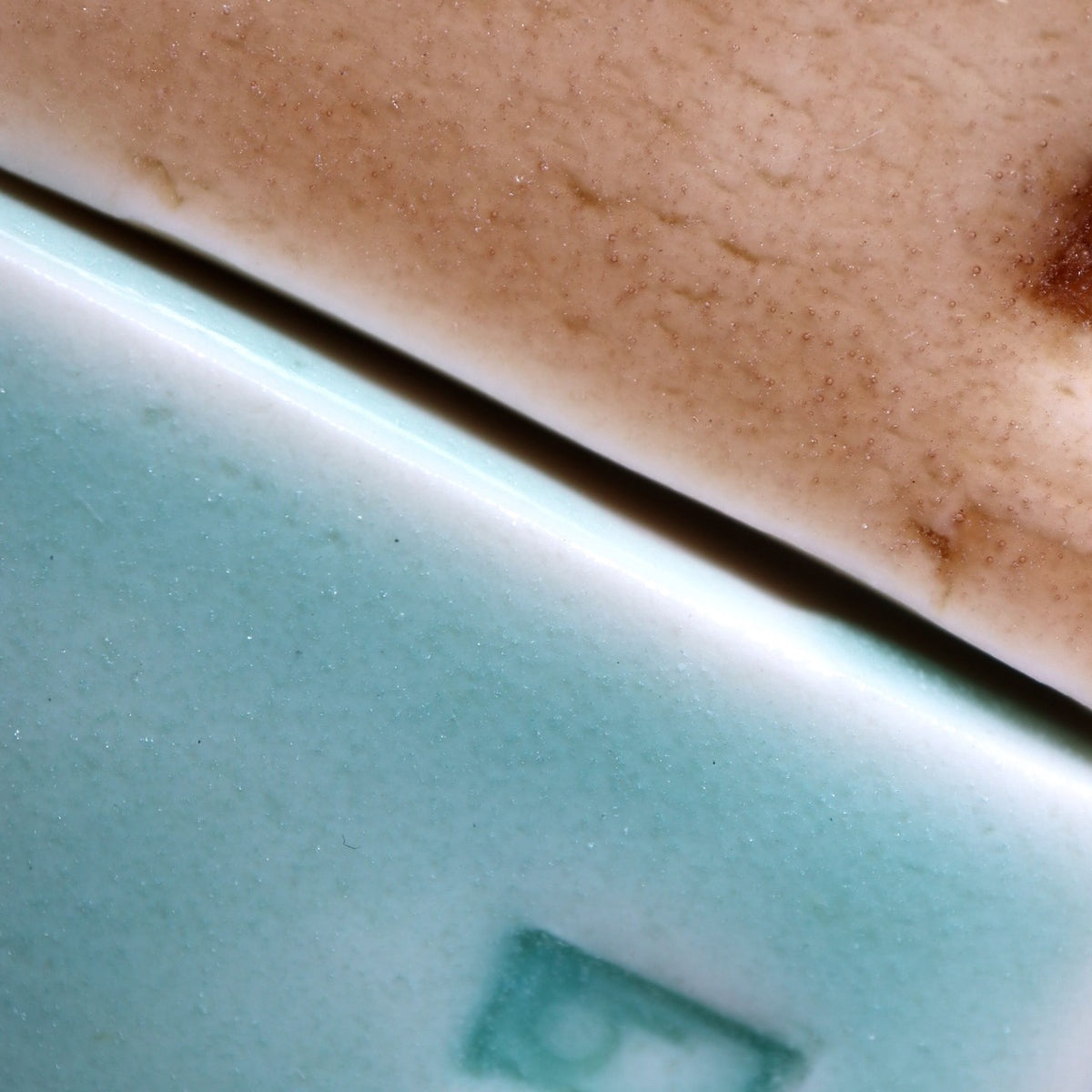
- Control surface: glossy to matte, phase separation, special effects
- Keep results consistent over time and use Glazy as a working tool
Good to know
- Mid-range firing, Cone 6-8 (approx. 1220-1250 °C), electric kiln. Tests are fired at 1240 °C.
- Bring your own stoneware test tiles (suitable to about 1240 °C, approx. 2 x 7 cm) or use ours. Please share details about your clay body beforehand.
- Intermediate: please tell the teacher a couple of weeks in advance which project you want to work on, with recipe, firing temperature and goal.
- Glaze chemistry is trial and error: only the fired test shows what actually happens, and each result narrows down the next test.
- FFP3 dust masks are mandatory during lab work and provided on site.
- All sessions take place on fixed dates and cannot be refunded or rescheduled.
Location
Viola Beuscher Studio
Gutleutstrasse 16a
60329 Frankfurt am Main
Refund & Cancellation Policy
Make sure to block your calendars, because all classes are fixed dates.
This means we cannot substitute and reimburse classes that you missed.
Terms of Service and Refund Policy applies.
If you have any questions, you are always welcome to contact us. We'll get back to you as soon as possible, within 24 hours on weekdays.
-
Shipping Information
This is a digital ticket which will be sent to you by e-mail.
-
Customer Support
Send us an e-mail to: hello@violabeuscher.com or via the contact form
-
FAQ’s
Find the most frequently asked questions in our FAQ Page
-
Refund
Make sure to block your calendars, because all classes are fixed dates.
This means we cannot substitute and reimburse classes that you missed.
Our refund policy applies
Beginner: Understand, Test, Create
No prior experience with glaze chemistry needed. Each day combines a focused lecture with hands-on lab time.
Day 1
Foundations
Introduction to glaze chemistry, silica and alumina, the role of fluxes, sources of raw materials.
LAB 1: guided test on how colorants react to bases.
Day 2
Colour
Colorants and opacifiers in depth.
LAB 2: guided test with different colour line blends on a glossy or matte base.
Day 3
From recipe to UMF
Reading a recipe as a UMF, making a functional glaze, the role of temperature and firing, the Stull map.
LAB 3: choose a glaze to test.
Day 4
Defects and effects
Glaze defects and how to correct them, special effect glazes and textures. Reviewing the results together and open Q&A.
Intermediate: Glaze Design
Testing strategies for your own glazes. More time for experiments than for theory: bring your own project or choose from a pool of testing strategies.
Day 1
Key components and UMF
Silica and alumina, oxide roles, fluxes, UMF basics, Seger limits, the Stull map, creating a glaze from raw materials.
LAB 1
Day 2
Materials, clay and surface
Geological origin of raw materials, how clay and glaze interact and fit, matte to glossy, the role of firing.
LAB 2
Day 3
Eutectics and fusion diagrams
Eutectic points and melt behaviour, De Montmollin fusion diagrams, creating a glaze from UMF values.
LAB 3
Day 4
Tests review
Open-kiln review of your results, additional testing strategies, mapping tests with Glazy.org, consistency in glaze making.
Good to know
Included
All materials, test tiles and kiln firings. The fee is per person.
Your own tiles
Welcome: stoneware suitable to about 1240 °C, approx. 2 x 7 cm. Please share details about your clay body beforehand.
Firing
Mid-range, Cone 6-8 (approx. 1220-1250 °C), electric kiln.
Safety
FFP3 dust masks are required during lab work and provided on site.
Your instructor
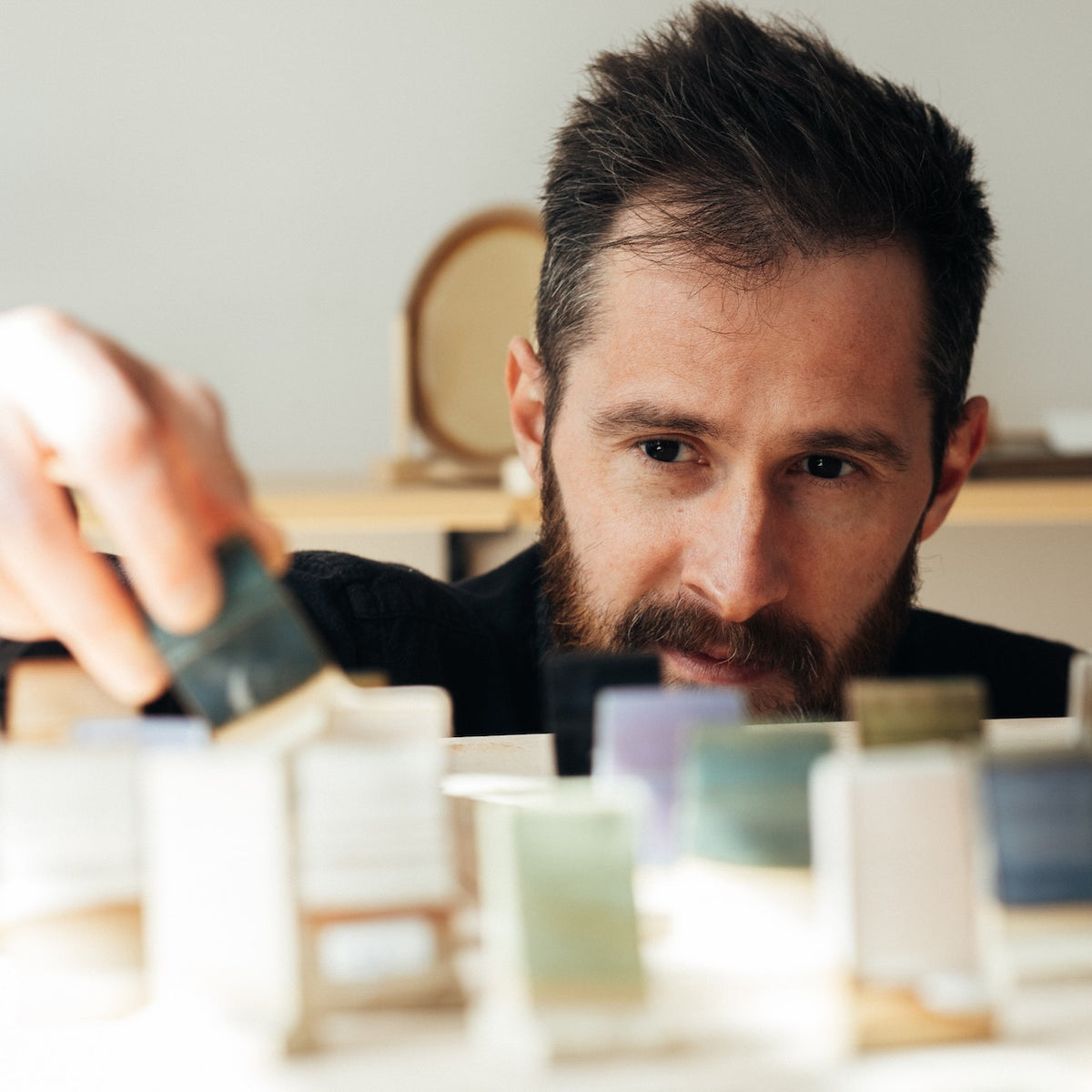
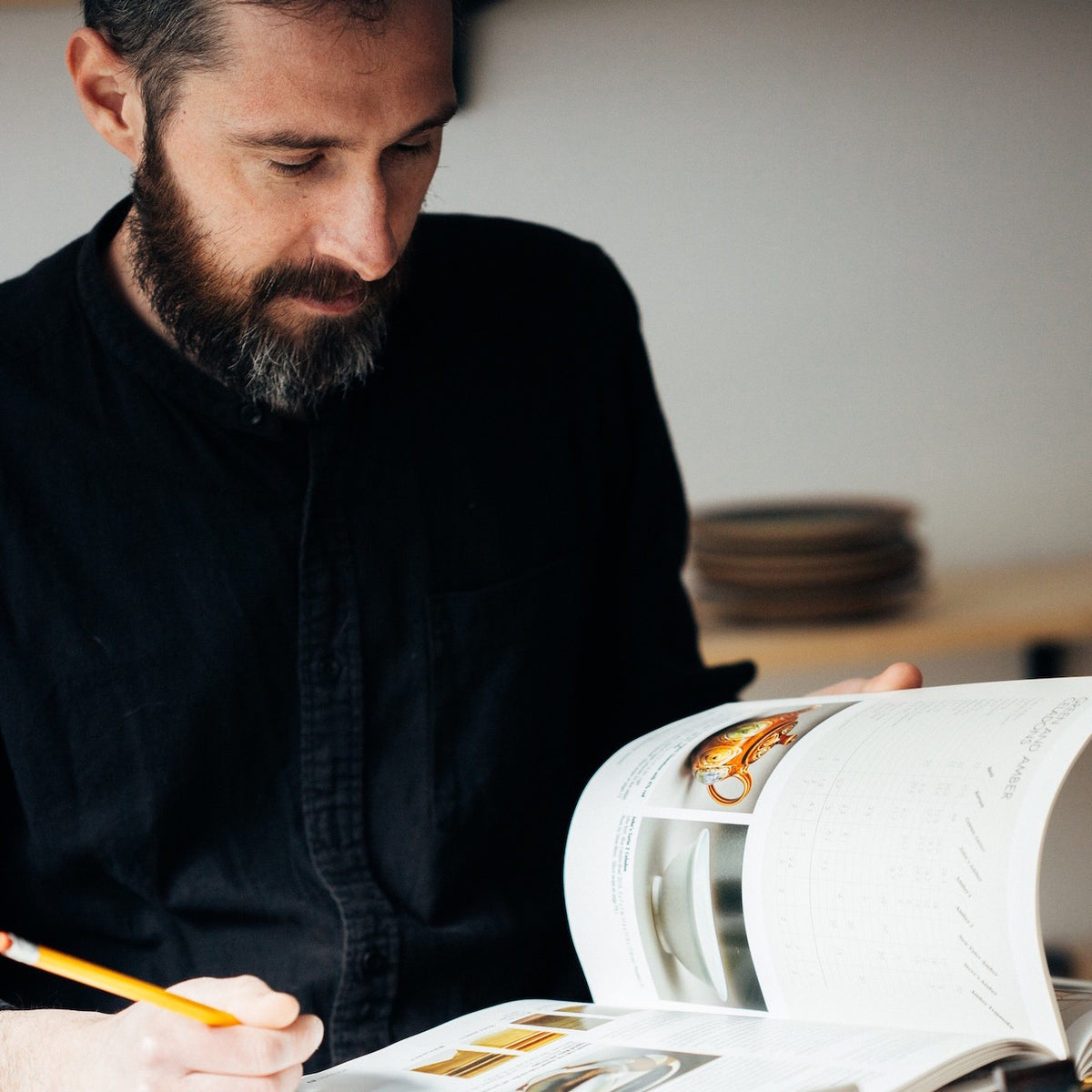
Riccardo runs Blayse Ceramic Studio in Berlin, where his practice is built around glaze chemistry and material research. He teaches from direct experience: years of systematic testing, kiln work and recipe development.
His goal is always the same: to give makers a clear framework they can apply independently, in any studio, long after the course ends. Taught in English.
We create a safe space
At our studio, everyone is welcome. We celebrate diversity, respect, and an inclusive environment for all. No matter your background or experiences, you will find a supportive community here. We do not tolerate any form of exclusion or discrimination—our space is dedicated to learning, growing, and creating together. With kindness and openness at the core of everything we do, we strive to foster an atmosphere where everyone feels safe.
FAQs
Glaze Chemistry Lab
Which level should I book?
Beginner needs no prior experience with glaze chemistry. Intermediate is the follow-up: you can mix a glaze, know the basics of glaze chemistry, already run tests and use books and Glazy.org, and want to refine your own project.
In which language is the course taught?
The course is taught in English.
What do I need to bring?
Nothing is required. All materials, test tiles and kiln firings are included and FFP3 masks are provided. You are welcome to bring your own stoneware test tiles (suitable to about 1240 °C, approx. 2 x 7 cm) and details about your clay body.
How do I prepare for the Intermediate course?
Please tell the teacher at least a couple of weeks in advance which project you want to work on, including recipe, firing temperature, and the problem or goal. Simply reply to your booking confirmation. This lets the teacher prepare suitable testing strategies.
Will every test give the result I expect?
Not necessarily. Glaze chemistry is made of trial and error. UMF, fusion diagrams and Glazy tell you where to look, but only the fired test tells you what actually happens. Each result, good or bad, narrows down the next test.
Can I get a refund or reschedule?
All sessions take place on fixed dates and cannot be refunded or rescheduled. Our refund policy applies.